
If you’re used to pounding the pavements in a town or city, you’ll know that urban running comes with its own unique blend of challenges and opportunities. From dodging pedestrians to waiting at traffic lights, running in built-up areas can be eventful.
The tough bits – crowded streets, constant interruptions, and less-than-perfect air quality – can be frustrating. But when you balance those with the convenience, visual stimulation and sheer variety that comes with city routes, urban running really has a lot to offer. And then there are the unexpected joys: a sunrise over rooftops, a fox darting through a quiet alley or a surprise mural down a side street you’ve never noticed before.
Whether you’re an experienced city runner or just thinking about giving it a go, we’ve pulled together everything you need to get the best out of your sessions. These 11 training tips are all about helping you feel more confident, stay safe, and squeeze the most from every urban run, whatever your goals.
Ready to race the rush hour? On your marks, get set, let’s go!
1. Understand urban terrain
First things first: city running is a very different beast from trail running or park loops. It’s a (concrete) jungle out there, complete with busy junctions, kerbs, potholes, people, parked cars and unpredictable vehicles. It can feel like your brain’s on high alert – which, if you like to switch-off-and-go, might be a shock to the system.
But knowing what to expect can help. And learning to read and react to the environment around you can actually sharpen your reflexes and mental focus. The better you know your terrain, the smoother your run will be.
Try this:
- Take a practice walk or slow jog around potential routes before committing to them as regular runs. Keep your eyes peeled for obstacles, quieter streets and easy-to-follow loops.
- Use apps like Strava, Komoot or Google Maps to find safe and runner-friendly paths. You can even listen to the instructions on your headphones!
- Look for areas that blend urban scenes with green space – parks, canals and riverside paths often cut through the heart of a city and provide welcome breathing room.
2. Prioritise safety at every step
Knowing that you’re taking steps to reduce risk and ensure your personal safety will also help build confidence and get the most out of your run. You can never switch off completely when running in an urban environment, but following these tips will help quiet the mind.
Remember:
- No footpath? No problem – just make sure you run facing the traffic. That way, you can see cars as they head towards you and they’re more likely to see you.
- Pay particular attention on stretches where your view or a driver’s could be obscured.
- Local knowledge is important. Avoid particularly busy roads or times of day if possible, or focus your routes on pedestrianised areas.
3. Be seen – day or night
Fluorescent yellow might not be the most flattering colour out there, but it does keep you safe and seen. Bright, high-vis clothing (with reflective strips for extra visibility) is essential for urban running, and not just in the early morning, evening or winter months. Call the fashion police if you like, but we think high-vis gear should be part of every urban runner’s wardrobe.
When running at dawn, dusk or night, you’ll need to take extra steps to be seen. We recommend using a headtorch, clip-on lights or reflective wristbands – they’re low-cost items and help avoid clashes with drivers, cyclists, pedestrians and scooter users.
4. Leave the headphones at home (or use one ear only)
We get it – you’ve spent ages compiling the ultimate running playlist. Everything’s on there – Local Hero (obviously), Don’t Stop Me Now, Running Up That Hill – and you want to crank it up to full volume. But sound awareness is crucial when running in urban environments, especially near traffic, busy junctions and big crowds.
We’re not saying you have to ditch the soundtrack entirely. A compromise: try bone conduction headphones, which allow you to listen to your favourite running anthems without blocking out background noise. You could also try running with the volume down or using just one ear bud. All three options allow you to enjoy sound while staying connected to your surroundings, reduce overstimulation and avoid accidents.
5. Train smarter in a stop-and-go city
Perhaps instead of complaining about the challenges of urban running – uneven pacing, crossings and junctions, regular interruptions and more – you could try to…embrace them?
It’s time to flip the script and focus on the many positives of running in an environment where nothing is ever completely still. City running keeps your reflexes and mental focus sharp. It forces you to be alert, adaptable and make split-second decisions. The result? City running builds resilience in a way that interrupted trails simply can’t.
6. Make peace with traffic lights
In the spirit of embracing challenges, let’s turn to traffic lights. Annoying for runners? Yes. Essential for the smooth running of traffic in an urban environment? Also yes. What we’re saying is, you’ve got to make peace with them.
So instead of getting frustrated when you hit a traffic light, why not take a breath – literally? Use the traffic light as a sign from the universe that it’s time to pause, stretch or jog on the spot until red turns to green.
If you’ve committed to a training plan, short pauses won’t derail you. And if you’ve got ambitious goals, use traffic-light heavy routes for internal training. Treat each green light as a sprint start and max out your efforts until you hit the next red.
7. Use stairs, slopes and urban features to your advantage
While the countryside has hills and valleys, cities have underpasses, bridges and stairs that can double as natural fitness stations.
Let’s look at your urban environment differently:
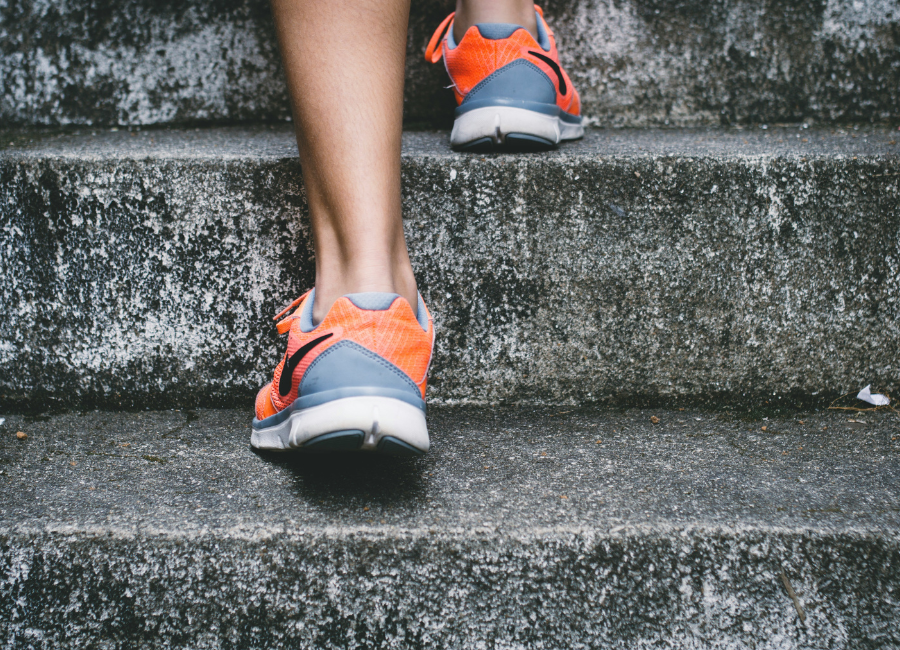
- Stairwells? The perfect opportunity for a high-intensity workout. Seriously – stair running builds your biggest muscles (hello, glutes), improves your explosive power and pushes cardiovascular fitness to the next level.
- Benches? Not just for sitting on – they’re ideal for step-ups, tricep dips and variations on a push-up. So what if people think you’re a little eccentric? Your body will thank you later.
- Ramps? Great for disabled access – even better for hill repeats.
Get creative and versatile – and watch your urban running go from strength to strength.
8. Run early (or late) to avoid congestion
Trying to cut down on interruptions to your running interruptions? Set your alarm clock and head out early. Or press the snooze button and make a late running date. Either way, you’ll miss rush hour and enjoy a more straightforward and streamlined run.
But quieter streets and smoother running aren’t the only benefits you’ll reap from skipping the busiest time of the day. You’ll also have fewer pedestrians to dodge, take in cleaner air and enjoy more mental space. Ready, set – now say hello to more headspace.
9. Mix up your routes to stay motivated
Urban runs don’t have to be repetitive. Keep your routes fresh and your mind sharp by exploring beyond your neighbourhood: dipping into different areas and boroughs, discovering canal or riverside paths, finding green spaces or making the most of industrial estates and urban fringe.
Variety is an overlooked training tool. But new environments keep things mentally stimulating and help reduce burnout. Cities are dynamic, unpredictable spaces – but by learning to deal with them, you’ll keep boredom at bay and become a better, more resilient runner.
10. Bring essentials for urban sessions
- Always carry a phone
Plans change and the unexpected happens, so it’s always a good idea to bring a phone with you when you run. That way, whatever the issue – dodgy sense of direction, needing to ring someone or buy a drink – you’ve got peace of mind in your pocket.
And in the rare but frightening event that something goes seriously wrong, help is just a couple of taps away.
- Pack light but smart
An arm pouch, running belt or clever zips in clothing are all great options for urban runs, allowing you to keep your essentials close without weighing you down. Debit card? Check. Travel pass? Check. House key? Check – everything you could possibly need, and no bulky backpacks required.
Do you *need* a water bottle? Opinions differ, but if you’re running in normal weather conditions for less than 45 minutes, we think you can skip it. But if it’s super hot or your heading out for a long one. Bring a bottle or a collapsible cup that you can fill up on the way.
11. Join a local running club or group
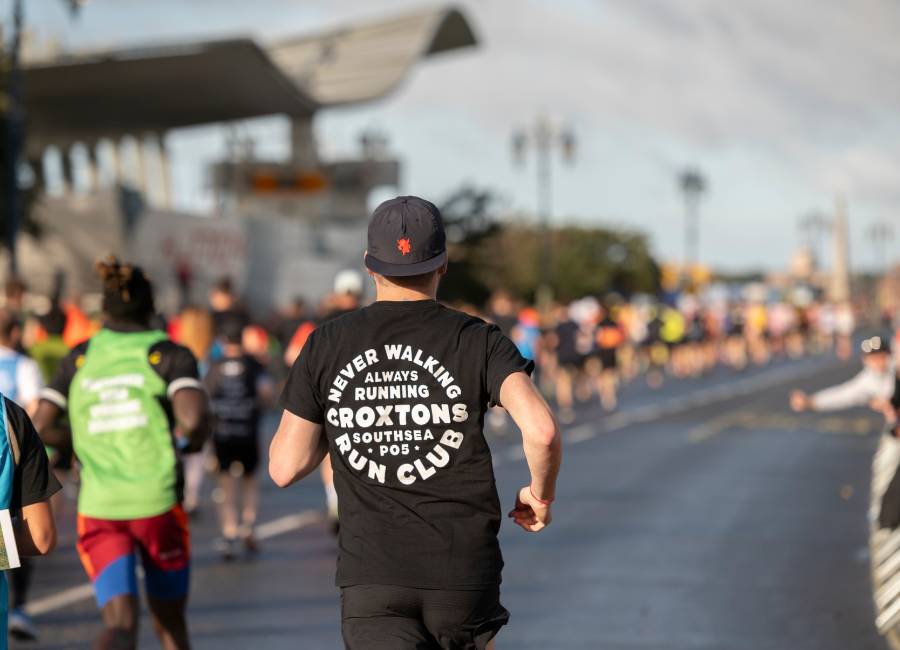
The huge benefit of urban running that we haven’t mentioned yet? People. The city is full of running friends you just haven’t met yet. And the quickest way to find like-minded runners is simply: head for your local running club.
There are so many benefits joining a running club, we dive into it here, but whether you’re after something casual or more regimented. Along with new friends, you’ll find community and connection, renewed purpose and motivation and expert guidance. If you’re new to an area or to running, going out in a group is a great way to discover routes and build your confidence. And if you’ve been running for a while, heading out with others can motivate you to set new goals, give you access to new equipment or help you find out about different running events in your area and beyond.
In urban settings, running clubs often time their weekday sessions to tie in with people finishing work and set off from central locations like parks or running shops. Strava, social media or independent running shops are great sources of information.
Our top tips for finding a running club that suits you:
- Identify your goals. Some clubs have a strong social element, while others focus on different distances or types of terrain. Choose one that suits your interests.
- Search online. Google, Facebook or Reddit will offer information and opinions. Once you’ve found a club that looks interesting, search their websites and social media to see what they’ve been up to recently.
- Local running shops. Staff are often keen runners themselves and are likely to have insider info on clubs that might be a good match for you.
- Try before you buy. Don’t feel you have to make a choice immediately. Lots of clubs offer a trial period before you have to make a commitment, which will allow you to find the right fit in terms of location, days and times and level of challenge.
The magic of urban running
Here at Great Run, we love urban running for the fact it offers ease and convenience right on your doorstep. The city becomes your gym: staircases for power, pavements for pace, and parks for some peace and quiet. We love the magic of watching the streets wake up or wind down, and seeing something you’ve never seen before: a bold fox, a busker, a sunset from a certain angle.
But it’s not all calm, of course, and that’s another reason why we’re big fans. Just like life, city running is unpredictable – but learning to deal with the unexpected makes you more adaptable and resilient. It keeps you present; it makes you feel alive. And if that all feels a bit deep, it also provides a great backdrop for your running selfies…
Find your next Great Run
At Great Run, we organise inclusive events for runners of all abilities in locations up and down the country.
With city centre starts and finishes, great transport links and incredible support, we can’t get enough of urban running – and, with these tips, you’re guaranteed to become a fan too.
Ready to take the next step on your running journey? Browse our events here.